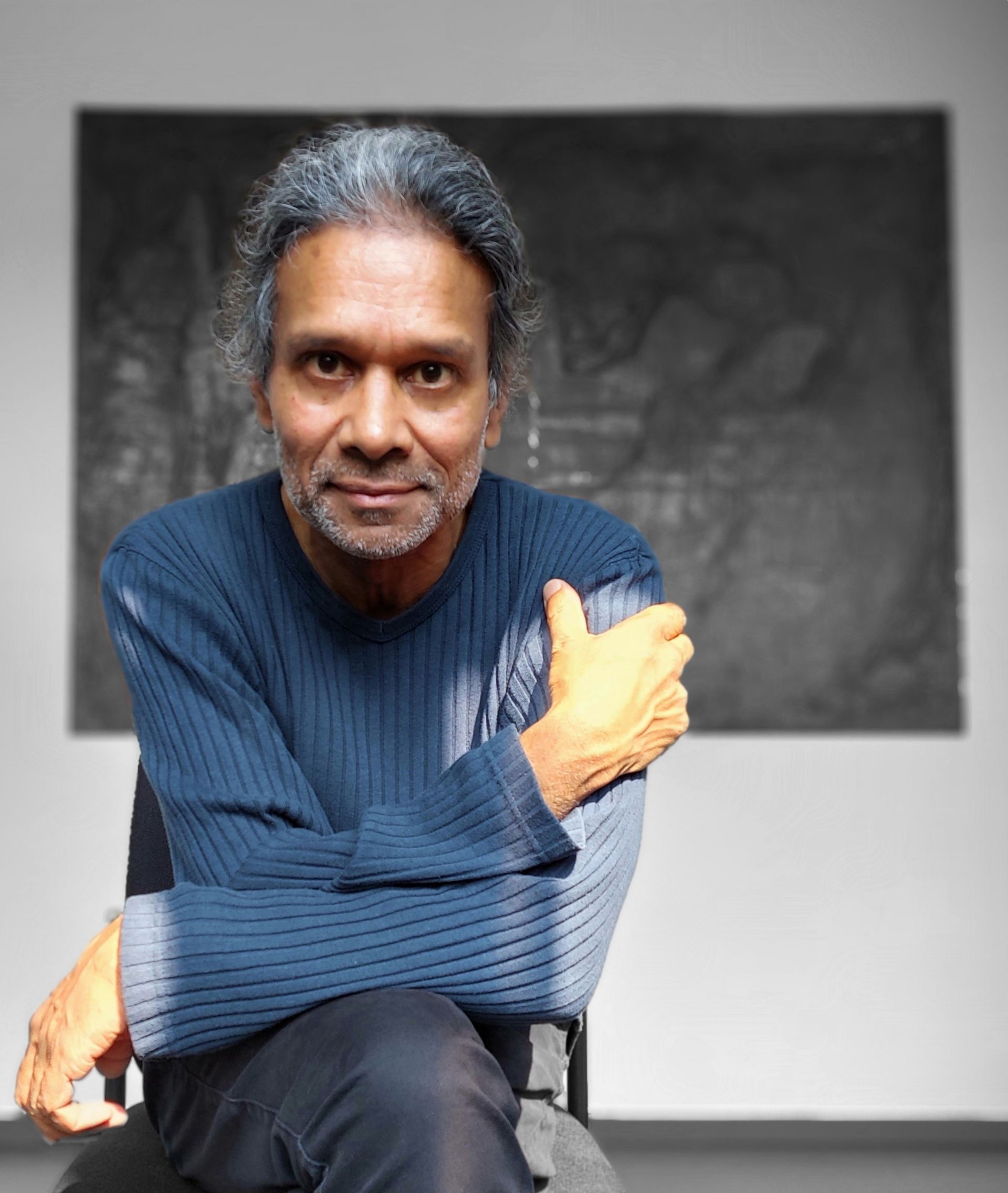
PD Dr. Pradeep Chakkarath
Cultural Psychology and Cross-Cultural Psychology
IPU Berlin
Alt-Moabit 91A, 2nd Floor
10559 Berlin
Tel.: +49 30 300 117-500
E-Mail: pradeep.chakkarath(at)ipu-berlin.de
Teaching focus
My lectures and seminars consistently explore the question of how culture and the psyche are interconnected and how they influence one another. The perspectives developed in this process are, in a broader sense, cultural studies-oriented, and in a narrower sense, focused on cultural psychology and cross-cultural comparison.
Since this course content raises the question of the extent to which scientific theories about the human psyche are also shaped by the respective culture in which they arise, my teaching emphasizes cultural and scientific-theoretical reflection on socialized traditions and views.
Research focus
My primary research interests in cultural psychology stem from my studies in philosophy and history, during which I focused in particular on the philosophy of science, the philosophy of language, and the history of culture, ideas, and society. The transition from these more theoretically oriented disciplines to empirical psychology, along with my participation in internationally oriented research projects in developmental psychology and cross-cultural studies, led to a deepening interest in the question of how assumptions in the philosophy of science, as well as developments in cultural, intellectual, and social history since the early modern period, have shaped psychological research into the relationship between culture and the human psyche.
More recently, I have become interested in the extent to which scientific theories about humans, their environment, and their psyche are shaped by historical and sociocultural factors. From a postcolonial perspective, I am particularly interested in how culturally constructed notions of the self and the other—to which the Western humanities have contributed significantly—have produced, and continue to produce, far-reaching scientific self-conceptions. One such consequence, for example, is the trivialization and extensive, at times systematic, exclusion of non-Western intellectual history from the largely Western-dominated canon of the social sciences and psychology. For me, this gives rise to the necessary call for a psychology informed by the social and cultural sciences, i.e., for the teaching of intercultural competencies, which are still lacking in psychological education.
Against this backdrop, one of my research interests is in bringing to light so-called “indigenous psychologies”—that is, psychologically relevant theories about human beings and their psyche that, while not found in Western psychology textbooks, exert a significant influence on the socialization of people within their respective culturally diverse developmental contexts.
More info to follow
More info to follow