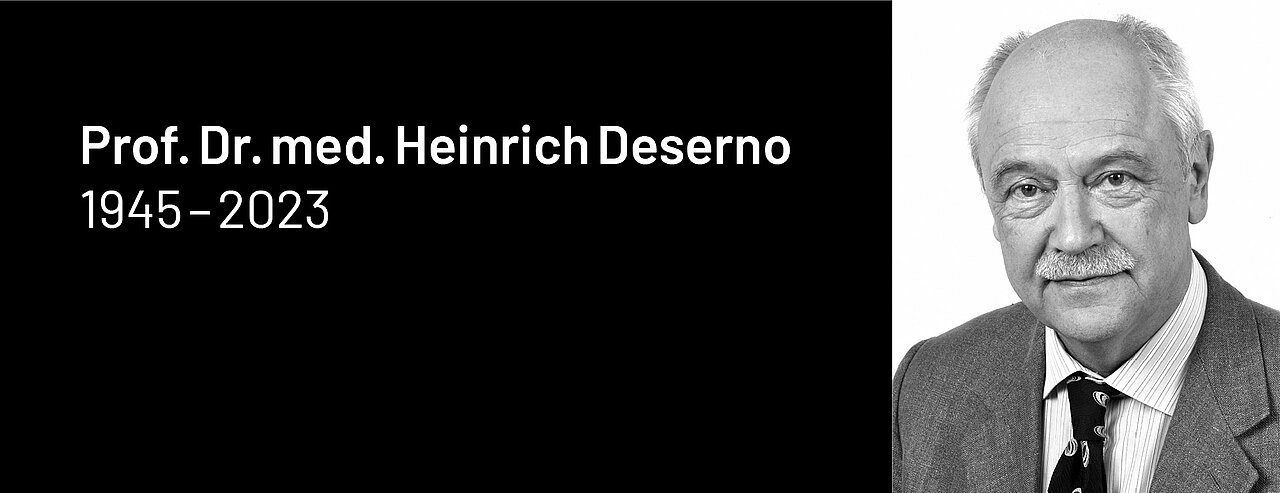
Prof. Dr. med. Heinrich Deserno
* 17 September 1945 † 14 February 2023
How it tore you from life
Words and thoughts tear us apart
I wonder with a silent mind
A sore heart full of gratitude
Last Tuesday we were caught unexpectedly by the news of Heinrich Deserno’s sudden death. Perhaps this obituary can be an attempt to put into words the speechlessness in which he has left us.
At the age of 64, Heinrich Deserno decided against waiting for retirement. Instead, he accepted a 2009 invitation to teach as Professor of Clinical Psychology at the International Psychoanalytical University in Berlin. Having such a clinically experienced, psychoanalytically educated, and scientifically accomplished teacher was a great stroke of luck for the first generations of students at the newly emerging university. But Heinrich was so much more than just a teacher and researcher. He took over the management of the psychotherapeutic outpatient clinic that was to be established, just like he did in his previous longtime workplace, the Sigmund Freud institute in Frankfurt. Anyone entering the university outpatient clinic sensed that quite a unique spirit was at work here. Heinrich never fell into the trap of thinking of himself as particularly important. He ran the outpatient clinic not with medical authority, but with his personality. And he shared – his clinical and institutional experience, his wisdom and his almost infinite knowledge of psychoanalytic literature, his compassion and his humor.
I don’t know whether Heinrich’s sudden death allowed him to review his life, to take stock, during his last days. But I am firmly convinced that on his list of what was important in his life, what really counted, the word relationship would have been at the top.
I believe that everyone who heard Heinrich talk about his family knew that it was the calming focal point in his life. But also in his professional life, his approach to prioritize relationships applied generously. The bond that had developed between Heinrich and the team at the IPU university outpatient clinic was palpable. The wonderful team, which deeply identifies itself with the institution and its director, remembers him today as an “artist of human relationships”. When, in conversation with me, students recalled the impression that Heinrich left on them, words such as fatherly, motherly, or “the grandfather everyone wishes they had” came up often.