Exploring psychotherapeutic conversations: Junktim e.V. becomes an affiliated institute of IPU Berlin
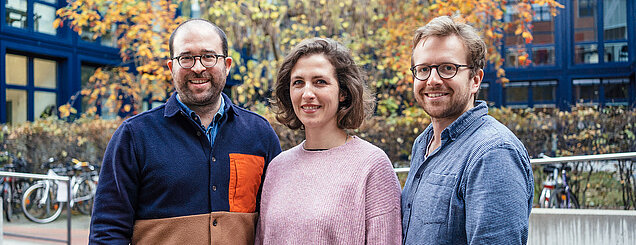
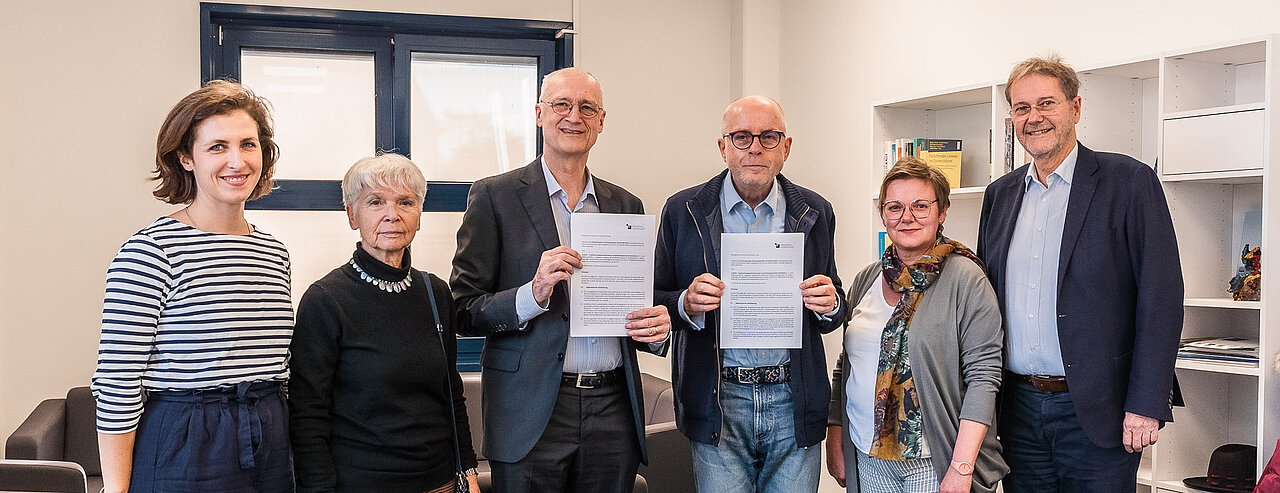
With the start of the winter semester 2022/23, Junktim e.V. became the first affiliated institute of the IPU Berlin. Founded in 2020, the association explores psychotherapy by studying real-life psychotherapy conversations. Thus, the IPU has gained an important cooperation partner in the context of psychotherapy research. The name Junktim is based on the “junction of healing and research”, coined by Sigmund Freud. In the following, the association’s board members and IPU graduates Michael Franzen, Dr. Florian Dreyer and Dr. Marie-Luise Alder tell us what the “junction of healing and research” means in practice.
What does the association Junktim e.V. do?
The empirical investigation of psychotherapeutic interaction and, above all, conversation is a key area of interest for us. We want to observe how patients and therapists interact with each other in the psychotherapeutic process, how they mutually agree on the plan “to do therapy” and how a therapeutic conversation is carried out in their interaction. Finally, connected to this is the big question: what actually constitutes a healing conversation?
In the future, what can we expect from Junktim e.V. as an affiliated institute of the IPU?
Our founding members come from research – sociology, linguistics, psychology- but also from the practice of psychotherapy or coaching. We are all united by an interest in empirical conversational research related to psychotherapeutic interaction. We would like to advance these interdisciplinary approaches and perspectives as well as the proximity to clinical practice, from which we constantly gain new ideas and questions.
Was ist das Spannende an der Verbindung aus Gesprächs- und Psychotherapieforschung?
Jede Interaktion zwischen Behandler:in und Patient:in bedeutet miteinander zu sprechen. Die Gesprächsforscher:innen wie auch die Psychotherapeut:innen haben Theorien, wie Gespräche laufen, was oder wie sie etwas bewirken. Sie können sich jedoch im jeweiligen Ansatz grundlegend unterscheiden. Wo Psychotherapeut:innen den Prozess mehr in den Blick nehmen und auf den Inhalt des Gesprochenen Wert legen, schauen Gesprächsforscher:innen stärker auf Details, wie Wortabbrüche oder Zögern. Diese Perspektiven in einen sinnhaften Austausch zu bringen, ist unser Ziel, um mehr über die Wirkung des therapeutischen Gesprächs zu erfahren.