
Your point of contact
Prof. Christine Stelzel
IPU Berlin
Alt-Moabit 91a, Room 2.20
10557 Berlin
Phone: +49 30 300 117-735
E-Mail: christine.stelzel@ipu-berlin.de


A fascination with the neuronal basis of complex human abilities is the foundation of our research.
Our research group investigates the neuronal basis of motivational and cognitive control processes in the context of various mental demands. These include:
- Multitasking situations in which several tasks are performed (almost) simultaneously.
- Working memory demands in which information must be briefly memorized and processed.
- Prospective memory demands in which intentions that have been formed are realized at a later point in time.
- Time estimation tasks, in which time intervals must be estimated without external aids.
We consider how motivational processes and inter-individual differences modulate the processing of such requirements from various perspectives. In addition to the role of external rewards, we also investigate how intrinsic motivation works and to what extent motivational and emotional processes jointly influence attention and cognitive control processes.
For this purpose, we use behavioral measures as well as neuroscientific methods, such as functional magnetic resonance imaging (fMRI) and psychophysiological methods (EEG). Currently, we are also using multivariate analysis methods to characterize the underlying task representations and relate them to individual differences and training effects.
Our main focus lies in understanding the role of prefrontal brain structures in their interaction with other cortical and subcortical regions. To explore the role of the neurotransmitter dopamine in this context, we also conduct genetic association studies, among other approaches.
We conduct many of our studies with young, healthy subjects in order to expand our basic understanding of the neurocognitive processes involved. In various collaborative projects, however, we also look at these processes over the lifespan, with a focus on changes and trainability in later adulthood.

Prof. Christine Stelzel
Principal Investigator

Sofia Kontaxi
Doctoral student

Dr. Marie Mückstein
Research Fellow

Alina Podschun
Research assistant

Dilara Coskun
Doctoral student

Paul Bruckmeir
Student assistant


MOMAP
From 2018 to 2023
Effects of modality mappings within working memory on postural control, associated neural correlates, and training-induced modulation of dual-task performance in old age.
MONALI
Since 2022
Modality compatibility effects in multitasking in more naturalistic environments across the lifespan.
MOCOPS
Since 2021
Using intelligence, working memory capacity and neural updating-efficiency parameter to predict task-switching processing style.
PRODOX
Starting 2025
The age-prospective memory paradox revisited – disentangling age-specific neurocognitive and motivational factors across settings.
New Consortium Publication with IPU Contribution in Nature
The dataset from one of our publications on emotion regulation has been published in Nature as part of the NIDER consortium (Neurobiology of Individual Differences in Emotion Regulation) in the context of a pre-registered, large-scale meta-analysis https://doi.org/10.1038/s41586-026-11203-1
The study by Sicorello et al. (2026) shows that the ability to regulate emotions apparently cannot be reduced to a single neural signature. In particular, the activity of prefrontal regulatory networks cannot be considered a specific indicator of individual differences in cognitive reappraisal. This finding also has practical implications for intervention research.
A commentary by Kober & Ochsner on this study has also been published in Nature: https://doi.org/10.1038/d41586-026-03262-1
We are delighted to be part of this exciting project!
New collaborative IPU publication in Motivation and Emotion
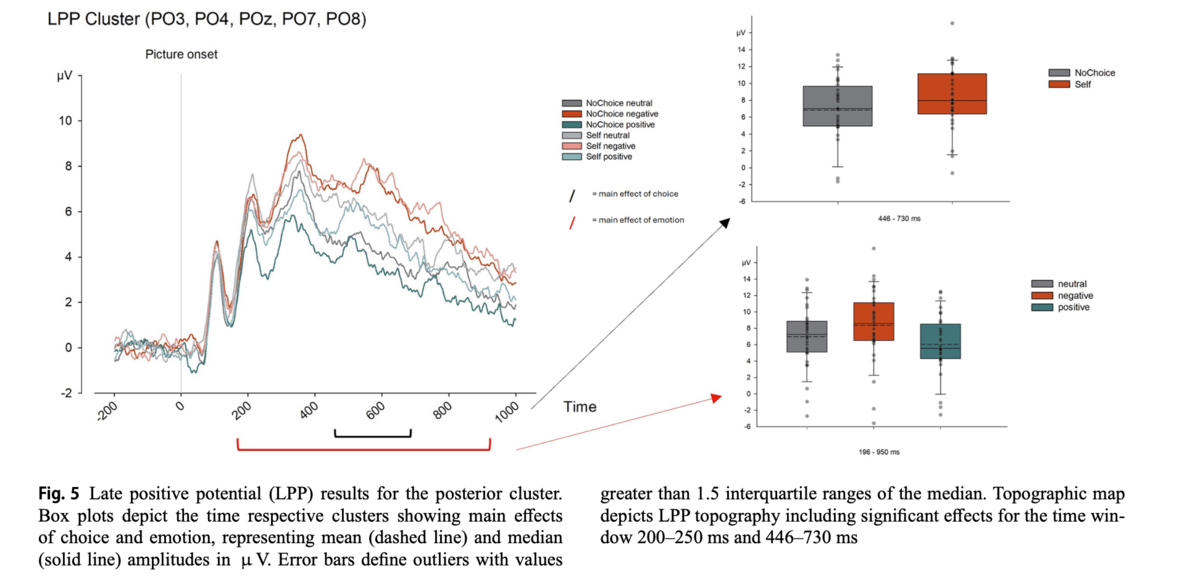
Self-determination: independent effects of choice and affective processing on the late positive potential (LPP) doi.org/10.1007/s11031-026-10251-4
As part of Sofia Kontaxi’s doctoral project, this study examines the interplay between intrinsic motivation and emotion processing. Two EEG experiments demonstrated a certain emotion-related event-related potential (LPP) also reflects motivational manipulations (“self-determined choice”). However, the motivational manipulation does not appear to affect emotional processing but rather exhibits independent effects on the LPP. The results are interpreted in terms of resource-limited attentional processes in the context of motivational-affective processing.

New article published in Human Brain Mapping: Network Neuroscience of Human Multitasking: Local Connections Matter
The findings of the fMRI study show that individual differences in modality-specific multitasking costs are associated with localized differences in functional connectivity, but not with differences in global network configurations.

We congratulate Dr. Marie Mückstein on successfully defending her dissertation and thus completing an excellent doctoral thesis. We wish her all the best for her upcoming postdoctoral position in Senne Braem’s research group in Ghent.
- Sicorello, M., Zaehringer, J., Kraynak, T. E., Gianaros, P. J., Nebe, S., Paschke, L. M., Steimke, R., Stelzel, C., Walter, H., ..., & Morawetz, C. (2026). Emotion regulation capacity lacks a shared neural signature. Nature. https://doi.org/10.1038/s41586-026-11203-1
- Sicorello M., Zaehringer J., Paschke L., Steimke R., Stelzel C., Gianaros P.J., LaBar K.S., Graner J.L., Kim S.H., Wessa M., Sandner M., Weinmar F., Derntl B., Kraynak T.E., Huneke N.T.M., Fagan H., Kohn N., Fernández G., Yan L., Marín-Morales A., …, Morawetz C. (2025). The elusive neural signature of emotion regulation capabilities: evidence from a large-scale consortium. bioRxiv. https://doi.org/10.1101/2025.08.18.670843
- Kontaxi, S., Kuchinke, L., Stürmer, B., & Stelzel, C. (in press). Self-determination: Independent effects of choice and affective processing on the late positive potential (LPP). Motivation and Emotion. https://doi.org/10.1007/s11031-026-10251-4
- Asuako, P.A.G, Mueckstein M., Stojan R., Mack M., Schwarze, S.A., Stelzel, C., Fandakova, Y., Stephan, D., Voelcker-Rehage, C. (2026) Effect of modality compatibility on dual-task performance in a more naturalistic environment. Psychological Research 90, 21. https://doi.org/10.1007/s00426-026-02238-0
- Mueckstein, M., Hilger, K., Heinzel, S., Granacher, U., Rapp, M. A., & Stelzel, C. (2025). Network Neuroscience of Human Multitasking: Local Connections Matter. Human Brain Mapping, 46(18), e70434. https://doi.org/10.1002/hbm.70434
- Hartmann, H., Gürsoy, Ç., Lischke, A., Mueckstein, M., Sperl, M., Vogel, S., Yang, Y.F., Feld, G., Kastrinogiannis, A., & Koppold, A. (2025). ARIADNE: A Scientific Navigator to Find Your Way Through the Resource Labyrinth of Psychological Sciences. Advances in Methods and Practices in Psychological Science, 8(1), 25152459241297674. https://doi.org/10.1177/25152459241297674
- Mueckstein, M., Görgen, K., Heinzel, S., Granacher, U., Rapp, M., & Stelzel, C. (2025). Multitasking Practice Eliminates Modality-Based Interference by Separating Task Representations in Sensory Brain Regions. The Journal of Neuroscience, 45(4), e0755242024. https://doi.org/10.1523/JNEUROSCI.0755-24.2024
- Mueckstein, M., Hilger, K., Heinzel, S., Granacher, U., Rapp, M. A., & Stelzel, C. (2025). Network Neuroscience of Human Multitasking: Local Connections Matter. Human Brain Mapping. https://doi.org/10.1002/hbm.70434
- Gebel, A., Busch, A., Stelzel, C., Hortobágyi, T. and Granacher, U. (2022). Effects of Physical and Mental Fatigue on Postural Sway and Cortical Activity in Healthy Young Adults. Front. Hum. Neurosci. 16:871930. https://doi.org/10.3389/fnhum.2022.871930
- Montag C., Solms, M., Stelzel, C., and Davis, KL. (2022) The future of the Affective Neuroscience Personality Scales: A reflection on seven pressing matters. Personality Neuroscience. Vol 5: e10, https://doi.org/10.1017/pen.2022.2
- Mueckstein, M.; Heinzel, S.; Granacher, U.; Brahms, M:; Rapp, M.A. & Stelzel, C. (2022). Modality-specific effects of mental fatigue in multitasking. Acta Psychologica, 230. https://doi.org/10.1016/j.actpsy.2022.103766
- Brahms, M.; Heinzel, S.; Rapp, M; Mückstein, M.; Hortobágyi, T.; Stelzel, C*. & Granacher, U.* (2022). The acute effects of mental fatigue on balance performance in healthy young and older adults – A systematic review and meta-analysis. Acta Psychologica, 225, 103540. https://doi.org/10.1016/j.actpsy.2022.103540 * shared senior authorship
- Brahms, M., Heinzel, S., Rapp, M., Reisner, V., Wahmkow,G., Rimpel, J., Schauenburg, G., Stelzel, C*., & Granacher, U*. (2021). Cognitive-postural multitasking training in older adults – Effects of input- output modality mappings on cognitive performance and postural control. Journal of Cognition, 4(1), 20. DOI: https://doi.org/10.5334/joc.146 *shared senior authorship
- Müller, C. J., Classe, F., Stürmer, B., Kuchinke, L., & Stelzel, C. (2021). Neurocognitive effects of self-determined choice and emotional arousal on time estimation. Advances in Cognitive Psychology, 5(2), 161-175. https://doi.org/10.5709/acp-0326-2
- Valt, C., Huber, D., Kontaxi, S., Frank, J., Nörtemann, M., & Stürmer, B. (2021). The Processing of Visual Signals in Major Depressive Disorder. Clinical EEG and Neuroscience, 53(1), 37-44. https://doi.org/10.1177/15500594211019916
- Brüning, J., Mückstein, M., & Manzey, D. (2020). Multitasking strategies make the difference: Separating processing-code resources boosts multitasking efficiency when individuals prefer to interleave tasks in free concurrent dual tasking. Journal of Experimental Psychology: Human Perception and Performance, 46(12), 1411-1433. https://doi.org/10.1037/xhp0000865
- Bohle, H., Rimpel, J., Schauenburg, G., Gebel, A., Stelzel, C., Heinzel, S., Rapp, M., & Granacher, U. (2019). Behavioral and Neural Correlates of Cognitive-Motor Interference during Multitasking in Young and Old Adults. Neural Plast, 2019, 9478656. https://doi.org/10.1155/2019/9478656
- Bruening, J., Ludwig, V. U., Paschke, L. M., Walter, H., & Stelzel, C. (2018). Motivational effects on the processing of delayed intentions in the anterior prefrontal cortex. Neuroimage, 172, 517-526. https://doi.org/10.1016/j.neuroimage.2018.01.083
- Stelzel, C., Bohle, H., Schauenburg, G., Walter, H., Granacher, U., Rapp, M. A., & Heinzel, S. (2018). Contribution of the Lateral Prefrontal Cortex to Cognitive-Postural Multitasking. Frontiers in psychology, 9, 1075. https://doi.org/10.3389/fpsyg.2018.01075
- Heinzel, S, Rimpel, J, Stelzel, C., Rapp, M.A. (2017). Transfer effects to a multimodal dual-task after working memory training and associated neural correlates in older adults. Front Hum Neurosci, 11, 85. https://doi.org/10.3389/fnhum.2017.00085
- Steimke, R., Nomi, J. S., Calhoun, V. D., Stelzel, C., Paschke, L. M., Gaschler, R.,Goschkte, T., Walter, H., Uddin, L. Q. (2017). Salience network dynamics underlying successful resistance of temptation. Soc Cogn Affect Neurosci, 12(12), 1928-1939. https://doi.org/10.1093/scan/nsx123
- Stelzel, C*., Schauenburg, G*., Rapp, M. A., Heinzel, S., & Granacher, U. (2017). Age-Related Interference between the Selection of Input-Output Modality Mappings and Postural Control-a Pilot Study. Front Psychol, 8, 613. https://doi.org/10.3389/fpsyg.2017.00613 *equal contribution
- Heinzel, S., Lorenz, R. C., Pelz, P., Heinz, A., Walter, H., Kathmann, N., Rapp, M.A.*, Stelzel, C.*(2016). Neural correlates of training and transfer effects in working memory in older adults. NeuroImage, 134, 236-249. https://doi.org/10.1016/j.neuroimage.2016.03.068 *shared senior authorship
- Paschke, L. M., Dorfel, D., Steimke, R., Trempler, I., Magrabi, A., Ludwig, V. U., Schubert, T., Stelzel, C.*, Walter, H.*(2016). Individual differences in self-reported self-control predict successful emotion regulation. Soc Cogn Affect Neurosci, 11(8), 1193-1204. https://doi.org/10.1093/scan/nsw036 *shared senior authorship
- Sekutowicz, M., Schmack, K., Steimke, R., Paschke, L., Sterzer, P., Walter, H., & Stelzel, C.. (2016). Striatal activation as a neural link between cognitive and perceptual flexibility. Neuroimage, 141, 393-398. https://doi.org/10.1016/j.neuroimage.2016.07.046
- Steimke, R., Stelzel, C., Gaschler, R., Rothkirch, M., Ludwig, V. U., Paschke, L. M., Trempler, I., Kathmann, N., Goschke,T., Walter, H. (2016). Decomposing Self-Control: Individual Differences in Goal Pursuit Despite Interfering Aversion, Temptation, and Distraction. Frontiers in psychology, 7, 382. https://doi.org/10.3389/fpsyg.2016.00382
- Paschke, L.M.*, Walter, H.*, Steimke, R., Ludwig, V.U., Gaschler, R., Schubert, T., & Stelzel, C. (2015). Motivation by potential gains and losses affects control processes via different mechanisms in the attentional network. NeuroImage, 11, 549-561. https://doi.org/10.1016/j.neuroimage.2015.02.04761 *shared first authorship
- Wiers, C. E., Stelzel, C., Gladwin, T. E., Park, S. Q., Pawelczack, S., Gawron, C. K., Stuke, H., Heinz, A., Wiers, R. W., Rinck, M., Lindenmeyer, J., Walter, H.*, & Bermpohl, F.* (2015). Effects of Cognitive Bias Modification-Training on Neural Alcohol Cue Reactivity in Alcohol-Dependence. Am J Psychiatry, 172(4), 335-343. https://doi.org/10.1176/appi.ajp.2014.13111495 *shared senior authorship.
- Ludwig, V. U., Stelzel, C., Krutiak, H., Magrabi, A., Steimke, R., Paschke, L. M., Kathmann, N., & Walter, H. (2014). The suggestible brain: posthypnotic effects on value-based decision-making. Soc Cogn Affect Neurosci, 9(9), 1281-1288. https://doi.org/10.1093/scan/nst110
- Soutschek, A., Stelzel, C., Paschke, L., Walter, H., & Schubert, T. (2014). Dissociable Effects of Motivation and Expectancy on Conflict Processing: An fMRI Study. J Cogn Neurosci, 27(2), 409-423. https://doi.org/10.1162/jocn_a_00712
- Wiers, C. E., Stelzel, C., Park, S. Q., Gawron, C. K., Ludwig, V. U., Gutwinski, S., Heinz, A., Lindenmeyer, J, Wiers, R.W., Walter, H.*, & Bermpohl, F. (2014). Neural Correlates of Alcohol-Approach Bias in Alcohol Addiction: the Spirit is Willing but the Flesh is Weak for Spirits. Neuro- psychopharmacology 39(3), 688-697. https://doi.org/10.1038/npp.2013.252 *shared senior authorship.
- Basten, U., Stelzel, C., & Fiebach, C. J. (2013). Intelligence is differentially related to neural effort in the task-positive and task-negative brain network. Intelligence, 41(5), 517-538. https://doi.org/10.3758/s13415-012-0100-3
- Ludwig, V. U., Stelzel, C., Krutiak, H., Prunkl, C. E., Steimke, R., Paschke, L. M., Kathmann, N. & Walter, H. (2013). Impulsivity, self-control, and hypnotic suggestibility. Consciousness and cognition, 22(2), 637-653. https://doi.org/10.1016/j.concog.2013.04.001
- Stelzel, C., Fiebach, C. J., Cools, R., Tafazoli, S., & D‘Esposito, M. (2013). Dissociable fronto-striatal effects of dopami-ne D2 receptor stimulation on cognitive versus motor flexibility. Cortex, 49(10), 2799-2811. https://doi.org/10.1016/j.cortex.2013.04.002
- Basten, U., Stelzel, C., & Fiebach, C. J. (2012). Trait anxiety and the neural efficiency of manipulation in working memory. Cognitive, affective & behavioral neuroscience, 12(3), 571-588. https://doi.org/10.3758/s13415-012-0100-3
- Basten, U., Stelzel, C., & Fiebach, C. J. (2011). Trait anxiety modulates the neural efficiency of inhibitory control. Journal of Cognitive Neuroscience, 23(10), 3132-3145. https://doi.org/10.1162/jocn_a_00003
- Stelzel, C., & Schubert, T. (2011). Interference effects of stimulus-response modality pairings in dual tasks and their robustness. Psychological Research, 75(6), 476-490. https://doi.org/10.1007/s00426-011-0368-x
- Stelzel, C., Basten, U., & Fiebach, C. J. (2011). Functional connectivity separates switching operations in the posterior lateral frontal cortex. Journal of Cognitive Neuroscience, 23(11), 3529-3539. https://doi.org/10.1162/jocn_a_00062
- Montag, C., Markett, S., Basten, U., Stelzel, C., Fiebach, C., Canli, T., et al. (2010). Epistasis of the DRD2/ANKK1 Taq Ia and the BDNF Val66Met polymorphism impacts novelty seeking and harm avoidance. Neuropsychopharmacology, 35(9), 1860-1867. https://doi.org/10.1038/npp.2010.55
- Montag, C., Basten, U., Stelzel, C., Fiebach, C. J., & Reuter, M. (2010). The BDNF Val66Met polymorphism and anxiety: support for animal knock-in studies from a genetic association study in humans. Psychiatry research, 179(1), 86-90. https://doi.org/10.1016/j.psychres.2008.08.005
- Stelzel, C., Basten, U., Montag, C., Reuter, M., & Fiebach, C. J. (2010). Frontostriatal involvement in task switching depends on genetic differences in d2 receptor density. Journal of Neuroscience, 30(42), 14205-14212. https://doi.org/10.1523/JNEUROSCI.1062-10.2010
- Stelzel, C., Basten, U., Montag, C., Reuter, M., & Fiebach, C. J. (2009). Effects of dopamine-related gene-gene interactions on working memory component processes. European Journal of Neuroscience, 29(5), 1056-1063. https://doi.org/10.1111/j.1460-9568.2009.06647.x
- Stelzel, C., Brandt, S. A., & Schubert, T. (2009). Neural mechanisms of concurrent stimulus processing in dual tasks.NeuroImage, 48(1), 237-248. https://doi.org/10.1016/j.neuroimage.2009.06.064
- Montag, C., Basten, U., Stelzel, C., Fiebach, C. J., & Reuter, M. (2008). The BDNF Val66Met polymorphism and smoking. Neurosci Lett, 442(1), 30-33. https://doi.org/10.1016/j.neulet.2008.06.064
- Stelzel, C., Kraft, A., Brandt, S. A., & Schubert, T. (2008). Dissociable neural effects of task order control and task set maintenance during dual-task processing. Journal of Cognitive Neuroscience, 20(4), 613-628. https://doi.org/10.1162/jocn.2008.20053
- Schubert, T., Fischer, R., & Stelzel, C. (2008). Response activation in overlapping tasks and the response-selection bottleneck. Journal of Experimental Psychology: Human Perception and Performance, 34(2), 376-397. https://doi.org/10.1037/0096-1523.34.2.376
- Stelzel, C., Schumacher, E. H., Schubert, T., & D‘Esposito, M. (2006). The neural effect of stimulus-response modality compatibility on dual-task performance: an fMRI study. Psychological Research, 70(6), 514-525. https://doi.org/10.1007/s00426-005-0013-7
- van der Meer, E., Friedrich, M., Nuthmann, A., Stelzel, C., & Kuchinke, L. (2003). Picture-word matching: flexibility in conceptual memory and pupillary responses. Psychophysiology, 40(6), 904-913. https://doi.org/10.1111/1469-8986.00108
- Podschun, A.N., Fink, I., Pupillo, F., Altgassen, M., & Stelzel, C. (2026). Age-specific predictors of everyday intention execution—evidence from experience sampling and multilevel Bayesian path modeling [oral presentation]. 6th International Conference on Prospective Memory, Heidelberg, Germany.
- Podschun, A.N., Steimke, R., Paschke, L.M., Ludwig, V. U., Gaschler, R., Kathmann, N., Goschke, T., Walter, H., & Stelzel, C. (2026). Network analysis of working-memory load and intention processing in the brain [poster presentation]. 6th International Conference on Prospective Memory, Heidelberg, Germany.
- Stelzel, C., Schäfer, L., Podschun, A.N., Altgassen, M., Habermas, T. (2026). Personal intention evaluation in young and older adults—a qualitative approach to age-related motivational differences [oral presentation]. 6th International Conference on Prospective Memory, Heidelberg, Germany.
- Podschun, A.N., Steimke, R., Paschke, L.M., Ludwig, V.U., Gaschler, R., Kathmann, N., Goschke, T., Walter, H., & Stelzel, C. (2026). Network analysis of working-memory load and intention processing in the brain [poster presentation]. 32nd meeting of the Organization for Human Brain Mapping, Bordeaux, France.
- Kontaxi, S., Minné, D., Fischmann, T., Solms, M. & Stelzel, C. (2025). Twenty-two Years of Affective Neuroscience Personality Scales: Advancing Emotional Systems Research with the ANPS-PGL [Oral presentation]. The 24th Annual Congress of the International Neuropsychoanalysis Society (NPSA), New York, USA. https://npsa-association.org/events/npsa-congress-2025-new-york/
- Mueckstein, M., Goergen, K., Heinzel, S., Granacher, U., Rapp, A. M. & Stelzel, C. (2024). Mitigating Modality-Based Interference: Multitasking practice and the distinctiveness of task representation in sensory brain regions [Poster presentation]. 46th Annual Meeting Cognitive Science Society (COGSCI), Rotterdam, Netherlands. www.cognitivesciencesociety.org/cogsci-2024/
- Kontaxi, S., Stuermer, B., Kuchinke, L. & Stelzel, C. (2024). Self-Determination: Motivational and affective processing depend on task context [Poster presentation]. 49th Annual Meeting Psychologie & Gehirn (PuG), DGPS, Tübingen, Germany. www.pug2024.de
- Mueckstein, M., Hilger, K., Heinzel, S., Granacher, U., Rapp, M.A., & Stelzel, C. (2024) Is similarity in functional brain connectivity across tasks related to modality-specific dual-task interference? [Poster presentation]. 49th Annual Meeting Psychologie & Gehirn (PuG), DGPS, Hamburg, Germany. www.pug2024.de
- Mueckstein, M., Goergen, K., Heinzel, S., Granacher, U., Rapp, A. M. & Stelzel, C. (2024). Dual-task practice eliminates task interference by shaping task representations in sensory brain regions. [Talk as part of symposium “Changes for learning: how do changes in task-specific representations shape adaptive cognitive control?” organized by Schwarze, S. & Fandakova, Y]. & 66th Tagung experimentell arbeitender Psychologen (TeaP), DGPS, Regensburg, Germany. www.conference-service.com/teap-2024-regensburg/
- Stelzel, C. , Paschke, L. M., Doerfel, D., Steimke, R., Ludwig, V. U. & Walter, H. (2025). Association of cognitive flexibility and attentional control with emotion regulation? Talk as part of symposium “Emotion Regulation: Neural underpinnings and assoications with executive functions” organized by Basten, U. & Karbach, J.]. 67thTagung experimentell arbeitender Psychologen (TeaP), DGPS, Frankfurt, Germany. Further information >>>