
Emotions and Affects - Perspectives in Political Psychology
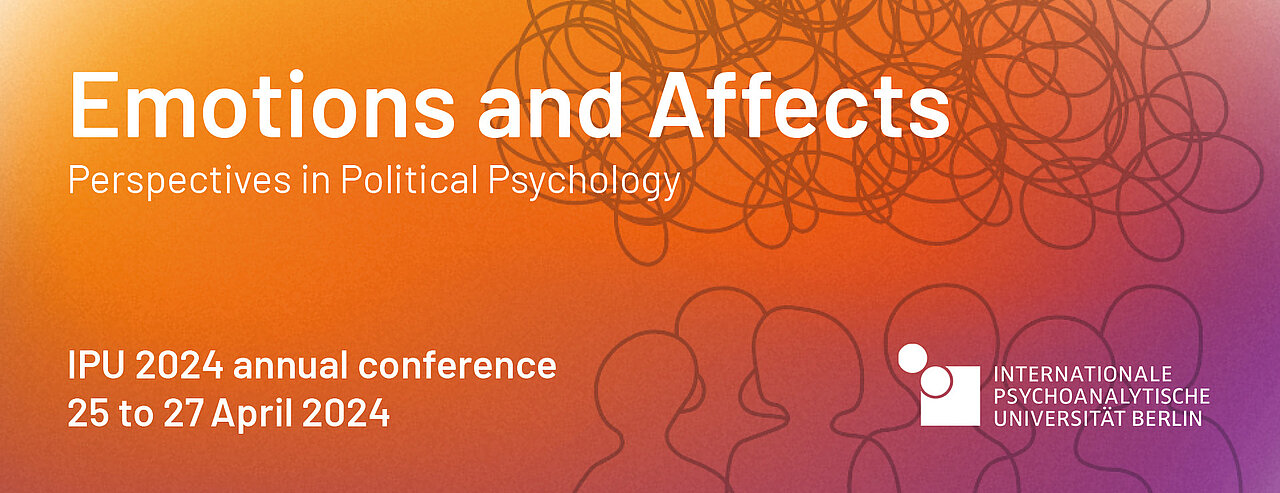
Annual Conference at the IPU Berlin 2024
The annual conference of the IPU Berlin is scheduled to take place from 25 to 27 April this year. Titled "Emotions and Affects," the focus of this year's conference will be on perspectives in political psychology. The conference is organised by IPU professors Thomas Kühn, Phil C. Langer and Gavin Sullivan.
Whether occurring in contexts of celebration, competition, challenge or conflict, the processes and practices of politics have always generated a wide range of emotions. These can range from the absence of emotion in such relatively simple forms such as boredom to the kinds of intense disen-gagement and resistance that invite treatment in terms such as “rage”, “Groll”, bile, and even res-sentiment. When positive, negative and complex “mixed” emotions are shared or mobilised via social media the resulting spread and circulation of feelings can lead vaguely defined affects or feelings (e.g., a distaste for a certain kind of politics) as well as precisely articulated emotions to appear to take on a life of their own, manifesting as unreasonable “excess”. In this conference, we aim not just to explore the kinds of feelings that are readily brought to mind when free associating about “politics” but also those patternings of affect, discourse, memory, identity and the features of their settings that are less obvious or accessible. Forms of individual and collective remembering, forgetting, suppression, repression of affects and emotion that form, create and recreate politicized identities are our objects for discussion and analysis. Political affects and emotions occur usually when we care about what is happening in our everyday lives and increasingly are evident intensively when people express being “beyond caring”.
In exploring such emotion-laden topics as grievance in politics, the affective attraction potential of (extreme) right-wing movements, leadership in times of identity politics, and politics of pride, we look not only to analyse of our emotional past and present, but also consider the emotional pulls towards very different political futures.
Which affects are mobilised in processes of social polarisation? What fears underlie this question itself? How can emotions also be utilised for "good" leadership? And how can emotions be utilised in research into the political sphere, which is so charged with affect? With the annual conference, programmatically dedicated to the role of emotions and affects, we invite you to explore these and other questions and join us in exploring the potential of a (not only psychoanalytically informed) political psychology in the emancipatory and socio-critical tradition of the IPU.
Program
In addition to two keynote lectures by internationally renowned scholars in the field of political psychology and numerous lectures and panel discussions with renowned and innovative speakers, there will be a poster exhibition on exciting research projects by students, doctoral candidates, post-docs and professors of the IPU and associated institutions. An exhibition on excessive vio-lence in Syria is also planned as a cooperation project.
The conference languages are German and English. A translation of the German or English presentations is not planned. An ad hoc translation of questions and answers is certainly possible during the discussion of the contributions.
Preliminary conference program with abstracts of the contributions and information on the contributors (German/English)
19:00-18:30: Admission and Registration
18:30-18:45: Opening of the conference: Gavin Sullivan (IPU)
- Presentation of Graphic Recording: Dominique Kleiner
- Presentation of the conference facilitators: Verena Pohl, Ida von Holtum & Jonas Rudolph
18:45-19:00: Foreword: Jan-Hendrik Olbertz (Präsident IPU)
19:00-20:15: Keynote: Catarina Kinnvall (Lund University)
Followed by a reception with the opportunity to visit the poster and art exhibition
09:15-09:45: Admission with a small conference breakfast
09:45-10:00: Introduction to the day: Phil C. Langer (IPU)
10:00-12:00: Panel 1: Grievance in Politics
- Gavin Sullivan (IPU, Berlin) Grievances, Resentment and Ressentiment in Fromm´s Weimar workers and employees on the eve of the Third Reich study
- Mikko Salmela (Copenhagen) Two Types of Resentment
- Tereza Capelos (Southampton) The Self, Precarious Identities, and Resentful Affect in the Era of Grievance Politics
Ab 12:00: Lunch break with fingerfood
12:30-13:15: Lunch Talk: Mit Emotionen und Affekten forschen: psychoanalytische und sozialwissenschaftliche Zugänge zu politischen Phänomenen mit Christine Kirchhoff (IPU), Ines Gottschalk (KKC Bochum) und Alina Brehm (IPU), moderiert von Niclas O'Donnokoé)
13:30-15:30: Panel 2: Das affektive Attraktionspotenzial rechtsextremer Bewegungen
- Sebastian Winter (Uni Hannover; ISS Frankfurt; IPU): Dynamiken der Vergemein-schaftung in „völkischen“ Jugendbünden
- Andrea Roepke: Remigration – Volksgemeinschaft – Völkische Ideologie: Einfluss-nahme und Netzwerke in der Bundesrepublik
- Franziska Behringer, Laura Füger, Alexander Möbius Paul Obermeyer (IPU): Erlebnis zwischen den Welten – „Völkische“ Jugendbünde als Orte rechtsextremer Sozialisation
15:30-16:00: Coffee break with the opportunity to visit the poster and art exhibition
16:00-18:00: Panel 3: Leadership in Times of Identity Politics
- Thomas Bruhn: On the relationship between transformative spaces and identity politics
- Amanda Fang: The importance of emotions and values for risk governance
- Samuel Heer: Identity Politcs and Leading Humanitarian Actions
- Arno Kirchhof (Federal Foreign Office): Identity Politics in Diplomacy
- Thomas Kühn (IPU): Leadership as Normative Identity Work
18:00-19:00: Finger food and art exhibition We remember. We resist. with impulse lecture und video installation
The exhibition can also be visited without registration.
19:00-21:00: Keynote: Cynthia Miller-Idriss (Hybrid*) The online lecture will be broadcast in lecture hall 1, 3rd floor, Stromstr. 2.
*The evening lecture by Cynthia Miller-Idriss can also be attended via Zoom without participating in the conference. If you would ONLY like to attend the lecture via Zoom, you can register using the registration form below. You will then receive the access data by e-mail.
09:15-09:45: Admission with a small conference breakfast
09:45-10:00: Introduction to the day: Thomas Kühn (IPU)
10:00-12:00: Panel 4: Soziales Trauma und die Politik der Zeugenschaft
- Veronika Heller (IPU): Tradierungen der Shoah in Gesprächen mit Überlebenden
- Kira Rudolph (KKC): Versagte Anerkennung: sexualisierte Gewalt gegen weibliche Häftlinge in NS-Konzentrationslagern
- Adina Dymzyk (AMCHA Berlin): Transgenerationalem Trauma begegnen
- Phil C. Langer (IPU): Transforming Trauma into Testimony: ISIS Child Soliders’ Stories
12:00-13:00: Lunch break with finger food
13:00-14:30: Panel 5: Politics of Pride
- Kathrin Voigt (IPU): National Pride and Shame as Affective Practices – Analyzing Symbolic Boundary Drawing in the Context of Nationhood
- Aisha-Nusrat Ahmad (DeZIM, IPU): Afghan Women in Solidarity – Counter Nar-ratives on the Dialectics of Oppression and Token Recognition
- Christopher Day (University of Coventry): “Being stripped of the subversive”: resisting rainbow capitalisation
and political normalisation at Pride parades and events - Dmitry Ulzaner (FU Berlin): "We'll kill everyone, rob everyone we need. Everything will be as we love!": Ideology and transgressive enjoyment
14:30-15:15: Closing session with reporters and graphic recording presentation and award ceremony for the best poster
15:15: End of the conference
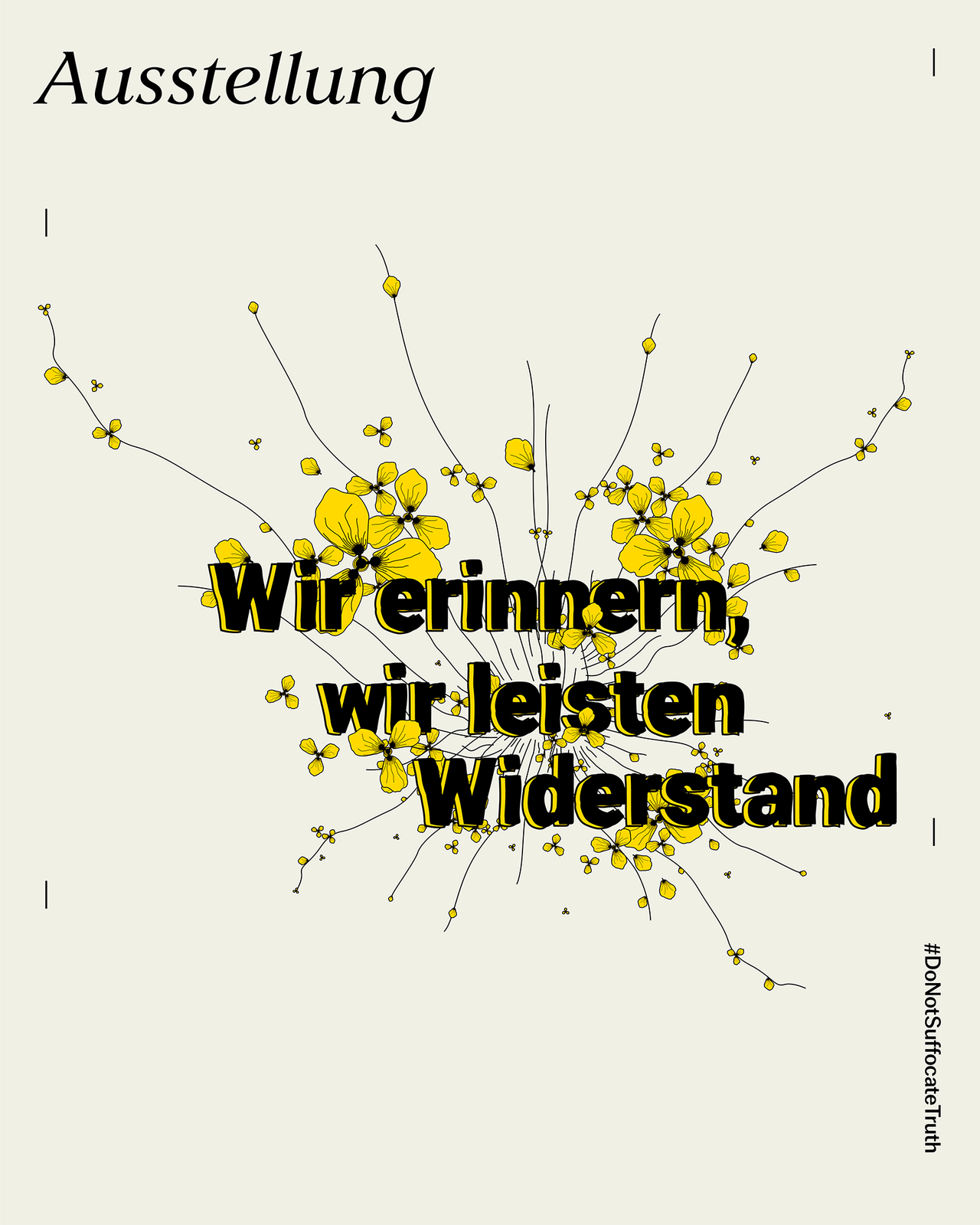
Hinweis: Die Ausstellung kann auch ohne vorherige Anmeldung besucht werden.